|
Introduction
Most sheet flooring is glued to the floor with a bed of adhesive. Some newer types of flooring, designed especially for do-it-yourself installation, require adhesive only at seams and edges.
If the entire floor has been laid in adhesive, you usually can work a putty knife underneath and peel up the damaged piece. You may need to apply heat. To make the patch less conspicuous, take time to carefully match its pattern to the floor's. To patch the newer types of flooring, cut out the damaged section and cement a patch as you would the seam of a new floor. |
|
|
1. Cut around damaged area
Use a framing square to mark and cut around the damaged area. Cut with a utility knife. |
|
|
2. Make a new cutout
Lay the cutout on a piece of matching material and trace around it. Accuracy is essential for a good fit. |
|
|
3. Guiding cuts
Guide your cuts with the square. Use a scrap of plywood to prevent scoring the surface underneath. |
|
|
4. Clean underlayment
Clean the underlayment well, then test the patch for fit. If it is a bit too large, slightly sand the edges. |
|
|
5. Put new section in place
Apply adhesive to the new tile with a serrated spreader. Align one edge, matching the pattern, and lower the new section into place. |
|
|
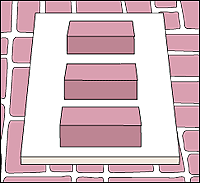
6. Weight new patch
Wipe off adhesive that might have oozed up around the edges, then weight down the patch evenly for at least 24 hours. |
|